WSJ: "Iran said Sunday that a dispute over $5 billion payment arrears on oil India exports had been resolved, after the Islamic Republic had threatened to interrupt sales to its second-largest crude market. In statements reported by oil ministry's Website Shana, Ahmad Ghalebani, head of Iranian National Oil Co., said 'both sides agreed to clear the debt promptly.'
The comments came after India Oil Minister Jaipal Reddy said Friday that India expects to pay the first tranche of arrears to Iran for crude-oil purchases via Turkey, as the two countries work toward resolving a seven-month-long payment impasse. Iran normally exports about 400,000 barrels of oil to India each day, making it India's second-largest crude supplier and Iran's second-largest oil buyer.
Separately, two people familiar with the matter said India's largest buyer of Iranian crude-Mangalore Refinery & Petrochemicals Ltd.-has already made some payments. MRPL declined to comment. Tehran had threatened to halt supplies to India from August due to the outstanding payments, which have risen to more than $5 billion. The dispute has ramifications not just for the two, but also for crude-oil markets, as a breakdown in their oil trade would have significantly altered regional oil flows." http://t.uani.com/n2Bc35
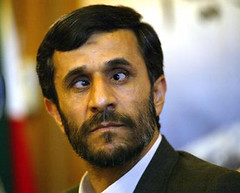
DPA: "Iran's President Mahmoud Ahmadinejad will attend the United Nations General Assembly in New York in September, a foreign ministry spokesman said Monday. Ramin Mehmanparast told Mehr news agency that the president would attend the assembly as he has in the previous years. Ahmadinejad's attendance, speech to the UN General Assembly and his remarks to the US media have prompted several heated reactions from Western nations.
He has used the opportunity to deny the sovereignty of the Israeli state, accuse the United States of having orchestrated the September 11, 2001 terrorist attacks, challenge the legitimacy of the UN Security Council and to deny the existence of gays in Iran." http://t.uani.com/o0UUye
Reuters: "Attacks on U.S. forces in Iraq by Iran-backed militia have fallen sharply thanks to U.S. and Iraqi military operations and political engagement by Baghdad, the top U.S. military officer said on Monday. Admiral Mike Mullen, chairman of the U.S. military's Joint Chiefs of Staff, did not elaborate on the specific steps taken in response to a wave of attacks that made June the deadliest month for U.S. forces in Iraq since 2008. But he told reporters shortly before landing in the northern Iraqi city of Mosul that U.S. and Iraqi operations as well as actions by Iraqi political leaders appear to have been successful at stemming the attacks for now." http://t.uani.com/qW81S8
Nuclear Program & Sanctions
Bloomberg: "Turkey is playing 'no role' in settling the debt India owes to Iran for supplies of crude oil, Iranian Central Bank Governor Mahmoud Bahmani said, according to the state-run Mehr news agency. In a sign of a lack of consensus among Iranian officials, Bahmani's statement was contradicted later today by Iran's ambassador to India Mehdi Nabizadeh, who said his country has held talks with Turkey in an effort to solve the payments problem, Mehr reported in a separate article...
Several refiners in India have opened accounts with state- owned Union Bank of India Ltd. to route money through a lender in Turkey, two people with direct knowledge of the matter said on July 29. The people, who declined to be identified because they weren't authorized to speak to the media, didn't disclose the name of the Turkish bank. Bahmani, who rejected accounts of Turkey's involvement, said Iran will manage to clear the debts 'by itself.' He gave no details, in the first Mehr report published today." http://t.uani.com/r6KX7T
Human Rights
AFP: "The trial of three US hikers detained two years ago on espionage charges was completed Sunday and a verdict will be issued 'soon,' Al-Alam television said, quoting Iran's general prosecutor. 'The last session was held today in Bench 15 of the Revolutionary Court,' Gholam Hossein Mohseni Ejeie told the Arabic-language channel. 'The final defence of the accused was heard. The end of the legal examination was announced and the verdict will be issued soon,' said Ejeie, who also acts as spokesman for the judiciary in the Islamic republic.
The session was held behind closed doors without the presence of one of the accused, Sarah Shourd, who is on bail, the channel added. Their lawyer Masoud Shafii told AFP that the verdict on Shourd, Shane Bauer and Josh Fattal should be issued within a week. 'The court session ended, the judge announced the end of proceedings, I did a complete defence, Josh and Shane did so also and I also defended Sarah. The court will issue its ruling in a week,' Shafii said." http://t.uani.com/o48aQc
AFP: "Amnesty on Friday renewed calls for Iran to release two young US hikers held on spying charges since July 2009, two days ahead of a fresh hearing in their case. 'Iranian authorities have held these men for two years, subjecting them to legal proceedings that fall far short of international fair trial standards,' the London-based organisation said. 'The parody of justice must end here.
By now it seems clear that the Iranian authorities have no legal basis for continuing to hold these US nationals, so they must be released and allowed to leave the country.' Shane Bauer, 28, and Josh Fattal, 29, were arrested with Sarah Shourd, 32, on the unmarked Iran-Iraq border on July 31, 2009. Tehran has accused the three of 'spying and illegally entering the country.'" http://t.uani.com/mTy6hx
CNN: "A woman blinded in an acid attack seven years ago said Sunday she stopped the 'eye for an eye' punishment for her attacker because 'such revenge is not worth it.' A physician was to drop acid -- under legal supervision -- into the eyes of Majid Movahedi on Sunday, according to Fars News Agency, to punish him for throwing acid in Bahrami's face. The act disfigured her face and blinded her. 'I never intended to allow Majid to be blinded,' Ameneh Bahrami told CNN. '... Each of us, individually, must try and treat others with respect and kindness in order to have a better society.' Bahrami stopped the punishment minutes before it was carried out, she said, adding that Movahedi already had been given anesthetic." http://t.uani.com/q4W5qq
Domestic Politics
Bloomberg: "The Revolutionary Guards commander who has been nominated by Iran's President Mahmoud Ahmadinejad to be the new oil minister is a suitable choice, given his 'strategic' outlook on the energy industry, Press TV reported, citing the head of the parliament's energy committee.
Rostam Qasemi is a 'practical person' and 'his views on oil and gas are strategic,' said Hamid-Reza Katouzian, who heads the committee, according to the state-run news channel's website. 'He is aware of problems in the oil and gas sectors and has solutions for them.' Qasemi heads the Khatam al-Anbiya Construction Headquarters, the engineering arm of the Islamic Revolutionary Guard Corps. He said last week that he will put development of oil and gas fields shared by Iran with other nations at the top of his agenda if he receives a confidence vote from the parliament." http://t.uani.com/qKySOn
Opinion & Analysis
Thomas Joscelyn in The Weekly Standard: "In a stunning development on Thursday, the U.S. Treasury Department accused the Iranian government of sponsoring al Qaeda. Treasury designated six al Qaeda terrorists and reported that they are working for a network headquartered in Iran. This al Qaeda network is 'headed by Ezedin Abdel Aziz Khalil, a prominent Iran-based al Qaeda facilitator, operating under an agreement between al Qaeda and the Iranian government.' ...
This is not the first time the Treasury Department has designated al Qaeda operatives operating in Iran. In January 2009, treasury designated four al Qaeda terrorists, including one of Osama bin Laden's sons, who were living in Iran. Thursday's designation, however, explicitly accuses the Iranian government of having an 'agreement' with al Qaeda that allows terrorists to use Iranian soil to move money and recruits into Afghanistan and Pakistan. Ezedin Abdel Aziz Khalil is described as 'an Iran-based senior al Qaeda facilitator currently living and operating in Iran under an agreement between al Qaeda and the Iranian government.' ...
Rahman was a longtime confidante of bin Laden. He 'joined Osama bin Laden in Afghanistan as a teenager in the 1980s,' the State Department reported. 'Since then, he has gained considerable stature in al Qaeda as an explosives expert and Islamic scholar.' Rahman 'became acquainted with [Abu Musab al Zarqawi],' the deceased leader of al Qaeda in Iraq, in the western city of Herat in the late 1990s. He then retreated with Osama bin Laden to the Tora Bora Mountains in late 2001 before moving on to Iran.
The U.S. government has repeatedly recognized the relationship between Iran and al Qaeda - even though it is widely assumed the two are incapable of collusion. For example, the 9/11 Commission found that the 'relationship between al Qaeda and Iran demonstrated that Sunni-Shia divisions did not necessarily pose an insurmountable barrier to cooperation in terrorist operations.' The Commission found that Iran and its chief terrorist proxy, Hezbollah, trained al Qaeda operatives as they plotted the 1998 embassy bombings.
And in more recent years, according to the Treasury Department, there has been no barrier to cooperating on operations in Afghanistan, Pakistan, and Iraq. The six terrorists designated on Thursday have moved funds and jihadists to each of these countries, using Iranian soil as a transit hub. The Treasury Department says that these activities are part of a formerly 'secret deal' between Iran and al Qaeda. The reality is that there is plenty of publicly-available evidence showing that Iran and al Qaeda have been cooperating since the early 1990s." http://t.uani.com/odWu9a
David Ignatius in WashPost: "Of all the leftover business for the Obama administration as U.S. troops prepare to leave Iraq at the end of the year, nothing is more symbolic of the continuing threats there -- and throughout the region -- than the case of a Lebanese Hezbollah operative named Ali Mussa Daqduq.
Daqduq has been one of Iran's top covert operatives in Iraq, according to U.S. officials. He was captured in March 2007 by U.S. forces in Basra who had evidence he had plotted (with Iranian help) a kidnapping in Karbala that January that resulted in the deaths of five American soldiers. U.S. satellite photos showed the Iranians had even built a mockup of the Karbala facility inside Iran to practice the kidnapping. Daqduq is now a prisoner at Camp Cropper, a U.S. detention facility near the Baghdad airport...
Herein lies the Daqduq conundrum, which has been the subject of weekly interagency meetings this summer: The White House is leaning against releasing a prisoner who has American blood on his hands. But how should he be prosecuted?... I'm no legal expert, but I do know that Daqduq represents the sharp end of the spear that Iran is pointing at Iraq and other Arab nations. He was part of Hezbollah's special operations unit, created in the mid-1980s by the late Imad Mughniyah and directed by him until he was assassinated in 2008.
The senior surviving member of this elite group of Hezbollah fighters is said to be Mustafa Badr al-Din, who, according to news reports, was indicted by the U.N. Special Tribunal for Lebanon for the 2005 murder of Rafiq al-Hariri. A dossier on Daqduq -- suggesting the scope of Iranian activities in Iraq -- was presented in July 2007 by Brig. Gen. Kevin Bergner, then U.S. military spokesman in Baghdad. In 2005, Hezbollah sent Daqduq to Iran to help train Iraqi extremists for the Quds Force, the covert-action arm of the Iranian Revolutionary Guard Corps. He made four trips into Iraq in 2006.
Back in Tehran, Daqduq was told to organize 'Special Groups' of Shiite extremists that would operate like Hezbollah fighters... These Hezbollah cadres, backed with Iranian money and intelligence support, have in recent years fanned out across the region. As Arabic-speaking Lebanese, they can work with Shiite activists from Bahrain and eastern Saudi Arabia, as well as Iraq. Iran's leverage in Iraq will be especially important if its ally, Bashar al-Assad, is toppled in Syria.
At a time when Iranian-made weapons are killing a rising number of U.S. troops who remain in Iraq, U.S. senior military commanders have warned the White House that releasing Daqduq would send what one calls 'a horrible message.' The Obama administration seems to agree -- and is weighing how to try this Hezbollah operative. I favor a trial, but not in the heart of Manhattan. The al-Qaeda threat may be waning but not that posed by Hezbollah." http://t.uani.com/r4AFp6
Reza Kahlili in WT: "While America focuses on its internal problems and its involvement in three wars and the world focuses on the global economy, Iran is progressing on three dangerous fronts: nuclear weapons, armed missiles and naval capability. Despite four sets of United Nations sanctions and pressure by the United States and Europe, Iran has chosen not only to continue its nuclear program but to expand it. Iran's leaders, dominated by fanatical mullahs, announced in mid-July that the installment of faster centrifuges had begun and that they will soon triple the production of enriched uranium to 20 percent at the Fardo nuclear facility deep in the mountain near the city of Qom.
It is estimated that Iran will have enough highly enriched uranium for one nuclear bomb within two months and currently has enough low-enriched uranium for three nuclear bombs. Iran is also perfecting its missile-delivery systems. Recently, the Revolutionary Guards held war games in which they launched several long-range ballistic missiles from missile silos. They also successfully tested two long-range ballistic missiles, capable of carrying a nuclear warhead, into the Indian Ocean.
The guards' ballistic missiles have a range of 1,200 miles, covering all U.S. bases in the Middle East and all of Israel, and now they possess missiles from North Korea with a range of 2,000 miles, which covers most of Western Europe. The Iranian navy has also been busy expanding its operation on the orders of Iran's supreme leader, Ayatollah Ali Khamenei, who has emphasized the navy's strategic importance in protecting the Islamic republic's interests and confronting its enemies...
The Revolutionary Guards have successfully test-launched long-range ballistic missiles from a ship before, so the statement that they are arming some of the vessels with such missiles should worry the United States. An Iranian navy ship or any commercial vessel operated by the Iranians could easily launch a missile from outside the Gulf of Mexico and essentially cover most of the United States. Much more alarming is the fact that once in possession of a nuclear bomb, Iran could successfully carry out its promise to bring America to its knees by a successful electromagnetic pulse (EMP) attack on America." http://t.uani.com/nYqnqZ
Showing posts with label EYE ON IRAN. Show all posts
Showing posts with label EYE ON IRAN. Show all posts
Tuesday, August 02, 2011


Wednesday, July 20, 2011
EYE ON IRAN - 7/20
Top Stories
Reuters: "Iranian Supreme Leader Ayatollah Ali Khameini backs offering $5.8 billion in aid to Syria to bolster its economy, a French newspaper said Friday, citing a report by a Tehran think-tank linked to Iran's leadership. Damascus has long been Tehran's main ally among otherwise mainly hostile Arab states.
After four months of popular unrest, Syria's economy is reeling under the weight of strikes, reduced oil exports, scaled-back trade and international sanctions. Its troubles have prompted Iran's leadership to consider offering $5.8 billion in financial help, including a three-month loan worth $1.5 billion to be made available immediately, French business daily Les Echos said. It added that Supreme Leader Ayatollah Ali Khamenei has backed the idea of the aid, which was outlined in a secret report by the Center for Strategic Research, a think tank linked to the Iranian leadership." http://t.uani.com/n4kP4X
UPI: "Iran expects to garner non-oil trade worth more than $45 billion during its current calendar year despite a plethora of international sanctions led by the United States, the United Nations and the European Union. Iranian President Mahmoud Ahmadinejad said non-oil exports during the calendar year ending March 20, 2012, would exceed $45 billion -- against $30 billion in the previous year -- and would consist of gas condensates, mineral fuels, chemical products, plastics and fertilizers as well as traditional commodities of fruit and nuts, Press TV reported... The United against Nuclear Iran campaign in the United States, meanwhile, is drumming up support for tougher measures against entities that trade with Iran.
UANI has urged U.S. state and municipal legislatures to follow the lead of California and Florida and pass legislation barring companies that do business in Iran from receiving state contracts. UANI said it wrote to governors and legislative leaders of 48 states, urging them to take action to pressure the Iranian regime. California and Florida have already passed Iran debarment legislation. UANI says Japanese crane manufacturer Tadano responded to its call by ending its business in Iran which was reported to have used the company's cranes to stage public hangings." http://t.uani.com/rmn7oK
YnetNews: "A Japanese heavy machinery manufacturer said it has cut business ties with the Iranian government following a report that its cranes have been used for public executions. The company's announcement came several days after United Against Nuclear Iran President Mark D. Wallace published an op-ed in Los Angeles Times where he names the Japanese Tadano company as one of several companies exporting cranes to Iran. 'In response to Iran's brazen attempts to intimidate and terrorize its own people, United Against Nuclear Iran has launched a Cranes Campaign. The goal is to educate crane manufacturers worldwide about the Iranian regime's clear misuse of their products and how such use can tarnish their brand image,' Wallace wrote. As part of the campaign, United Against Nuclear Iran published on its website a list of seven international manufacturers exporting cranes and other heavy equipment to Iran, along with pictures of the cranes being used for public executions." http://t.uani.com/r92WoP
Nuclear Program & Sanctions
Reuters: "Iran said on Sunday it would export 2.6 million litres of gasoline per day due to a rise in production and fall in consumption, an official was quoted as saying by the semi-official Fars news agency. 'Considering the country's gasoline production capacity has increased to 70 million litres per day and consumption dropped to around 54 million, it is now possible to export 2.6 million,' said Ali-Reza Zeighami, the head of the state-owned National Iranian Refining and Distribution Co. Zeighami added exports would be from current stockpiles.
In July 2010, the oil ministry reported Iran's daily gasoline production was 45 million litres and consumption 63 million, with the rest made up by imports -- an economic weak point deliberately targeted by U.S. and European sanctions. Iranian officials had said the country's production capacity would increase by 25 million litres after it built refineries. Some foreign analysts view this rapid transformation with scepticism, saying it would take years to add so much capacity." http://t.uani.com/pPndCC
AP: "Iran's official news agency IRNA says President Mahmoud Ahmadinejad has called for a quick increase in trade with China to $100 billion a year. The news agency says current trade between the two countries is worth about $30 billion. Iran turned to China after the West imposed economic sanctions over Tehran's suspected nuclear weapons program. Iran says it's nuclear program has a strictly peaceful purpose. Ahmadinejad spoke after a meeting Saturday with He Guoqiang, a senior executive of the Chinese Communist Party. The Iranian president says he hopes the new trade goal will be reached quickly, but did not give a time frame. IRNA says the two countries signed agreements worth $4 billion in mining, energy and other areas." http://t.uani.com/nrfWvM
Human Rights
AP: "Iran's intelligence minister said Friday that his country has found a way to block the so-called 'Internet in a suitcase,' a program reportedly developed by the U.S. to bring online access to dissidents around the world. The minister, Heidar Moslehi, told Muslim worshippers that Iran was aware of the program from the start. 'We prepared a solution for it,' he said in a speech broadcast live on state radio. He did not elaborate. Iran has alleged that the program, first reported by The New York Times last month, is largely aimed at the Islamic Republic.
Earlier this month, Iran's telecommunications minister, Reza Taqipour, said Iran is taking technical measures to combat the the program. Taqipour was quoted by state media as saying that the program is part of a 'cultural invasion' by Iran's enemies aimed at promoting dissent and undermining Iran's ruling system." http://t.uani.com/rlzMGM
AFP: "Iran has arrested another female reporter wanting to cover the women's football World Cup in Germany, a press report said on Sunday, saying she was being held in Tehran's notorious Evin jail. Pegah Ahangarani, 27, who is also an actress and film-maker and said to be a supporter of the Iranian opposition movement, was arrested earlier this month in her flat and has not been seen since, the Spiegel weekly said. Ahangarani was intending to cover the women's World Cup, which was due to wrap up on Sunday, for German broadcaster Deutsche Welle, Spiegel said. Deutsche Welle said that Ahangarani was due to travel to Germany for the tournament and write an Internet blog about it.
According to sources close to Ahangarani cited by Deutsche Welle's Persian language service, she was summoned to the interior ministry the day before she was due to travel and threatened with arrest if she tried to leave the country. As a result of this and further 'threats' Ahangarani decided not to attempt to travel to Germany, and on July 14 it was confirmed that she had been arrested four days earlier, Deutsche Welle said." http://t.uani.com/nZGky9
Domestic Politics
Guardian: "Mahmoud Ahmadinejad's government has suffered an unprecedentedly harsh blow to its credibility during the last few weeks. The Iranian president has witnessed the arrest of officials close to high-ranking members of his cabinet, and has engaged in an escalating war of words with senior conservatives and Iran's judiciary. Even high-ranking members of the Revolutionary Guards, long believed to be politically aligned with Ahmadinejad, have sparred publicly with his administration, with both sides accusing each other of illegal financial dealings. Despite this crisis, Ahmadinejad has not only maintained his clout but has also managed to break through many of the regime's traditional restrictions on executive power. His political standing has been weakened but not undermined.
This has left Iranian legislators worried that Ahmadinejad can still gain long-lasting political influence through next year's parliamentary elections. In an effort to extend his power beyond 2013, when his term ends, Ahmadinejad will continue to push the limits of Iran's government structure and pick fights to place allies in influential positions, according to Hossein Askari, who holds the Iran chair at George Washington University." http://t.uani.com/r3Vdh6
AP: "Iran's central bank is asking citizens their opinions on new names for the country's currency. Visitors to the bank's website can choose from several names, including rial - the current name - toman, parsi and derik. In the online survey, the bank also asks respondents how many zeros should be removed from the currency. The government has proposed lopping off four zeros.
The biggest Iranian banknote is 100,000 rials, which is equivalent to around 9 dollars. The poll results will be taken into consideration when the government draws up a draft on changes to the currency. The proposal will be submitted to parliament." http://t.uani.com/nue2b6
Foreign Affairs
Reuters: "Argentina on Sunday welcomed an offer from Iran to help investigate the 1994 bombing of a Buenos Aires Jewish centre that killed 85 people and which local prosecutors blame on Iranian officials. Argentine prosecutors say that Iranian Defence Minister Ahmad Vahidi is among those behind the attack. Iran denies any links to the bombing. Local newspapers over the weekend carried a news release from the Iranian government offering to start talks aimed at 'shedding light' on the bombing that levelled the Argentine Israeli Mutual Association building. 'The foreign ministry hopes to receive an official communication from its Iranian counterpart,' the Argentine government said in a statement, which went on to call the overture from Iran 'unprecedented and very positive.'" http://t.uani.com/pxVDeL
AP: "Iran's official news agency says Revolutionary Guard forces have taken control of three bases of an Iranian Kurdish opposition group in neighboring Iraq. IRNA quoted Colonel Delavar Ranjbarzadeh, a local Guard commander, as saying on Monday that many members of the Iranian Kurdish opposition group PEJAK have been killed in fierce clashes on the border over the past two days. Iran threatened last week to attack PEJAK bases in Iraq after it accused the president of Iraq's semi-autonomous Kurdish region, Massoud Barzani, of providing bases for the group without informing the central Iraqi government in Baghdad. Iran has sporadically bombed PEJAK bases deep inside Iraqi Kurdistan." http://t.uani.com/q1cP6Y
AP: "Iran's state TV says the country's supreme leader has told Pakistan's president that the United States is Pakistan's real enemy. Ayatollah Ali Khamenei spoke Saturday during a meeting with Pakistani President Asif Ali Zardari. It was Zardari's second visit to Iran in less than a month. Khamenei has the final say on all state matters in Iran. The U.S.-Pakistan relationship has been on a downward spiral since the May 2 U.S. raid that killed al-Qaida chief Osama bin Laden in a Pakistani garrison town." http://t.uani.com/o9Qx3o
Opinion & Analysis
Jackson Diehl in WashPost: "One of the most curious features of the Obama administration's foreign policy is the contrast between the silky, non-confrontational public diplomacy it employs when dealing with dictatorships and adversaries, such as Russia, China and Venezuela - and the brusqueness with which it often addresses U.S. clients and allies. The latest example of this came last week in Iraq, where the United States is engaged in a complex and high-stakes competition with Iran. At immediate issue is whether Iraq's Shiite-led government will ask Washington to leave behind 10,000 or so soldiers of the 47,000 troops now there, instead of completing a full withdrawal by the end of this year.
The larger question is whether Iraq will be forced by a full U.S. pullout to become an Iranian satellite, a development that would undo a huge and painful investment of American blood and treasure and deal a potentially devastating blow to the larger U.S. position in the Middle East...
The tone of that remark, like other administration rhetoric on the potential deal, suggests that Obama and his top aides believe they are offering Iraqi Prime Minister Nouri al-Maliki a favor by inviting a request to leave troops behind, and don't think a stay-on force is a vital U.S. interest. Others see it quite differently. Maliki, like U.S. commanders in the Middle East, understands very well that without an American military presence, Iraq will be unable to defend itself against its Persian neighbor.
Iranian-backed militias are already stepping up attacks on U.S. and Iraqi forces with sophisticated rockets and roadside bombs; without U.S. help, Iraqi forces cannot easily counter them. Moreover, Iraq's conventional forces are no match for those of Iran... Most Iraq watchers believe Maliki wants to ask for U.S. troops. But the problems - in addition to the chronic Iraqi practice of putting off hard decisions until the last minute - are formidable. Perhaps the most serious is Maliki's political dependence on the Shiite party of Moqtada al-Sadr, an Iranian client.
Sadr is threatening armed resistance if U.S. troops stay, and the offensive already underway by Iranian-sponsored militias shows that Tehran is ready to fight. Administration officials nevertheless argue that the danger of Iranian hegemony in Iraq - and hence the importance of a stay-on force - is overstated by analysts such as Kagan. 'Iran is struggling with its own economy,' Antony Blinken, a senior aide to Biden, told me. 'Infighting among Iranian leaders has undercut its ability to make decisions about domestic and foreign policy,' and the uprising against the Syrian regime has further shaken Tehran's confidence... The only Obama administration official who has publicly made the case for a continued U.S. military presence is former defense secretary Robert M. Gates. In a speech in May, he said it would send 'a powerful signal to the region that we're not leaving, that we will continue to play a part.' He added: 'I think it would be reassuring to the Gulf states. I think it would not be reassuring to Iran, and that's a good thing.' Gates publicly urged Iraq to keep U.S. troops. Now he is gone, and the message is 'dammit, make a decision.' Whether or not Iran is prepared to seize hold of Iraq, those aren't the right words to keep an ally." http://t.uani.com/qGtyyj
Farnaz Fassihi in WSJ: "Iranians have turned to the Internet to organize antigovernment protests. Now they're flocking online to defy another Islamic Republic edict: buying and selling dogs.
Pooch lovers in Iran are clicking on popular websites like Woof Woof Iran Digital Pets and Persianpet to pick their favorite canine, study dog grooming or swap pet tales. Buying and selling dogs is illegal in Iran, unless they are guard dogs or used by police. Dogs are considered 'haram,' or unclean, in Islam. Until recently, keeping dogs as pets was limited to a small circle of Westernized Iranians. But access to satellite television-and American programs depicting families playing with pups-has turned dog ownership into a sign of social status in Iran. 'It's the latest fashion now to buy each other puppies as birthday gifts,' says Amin, a 25-year-old. He had never pet a dog until traveling to a village two hours outside Tehran to obtain a German Shepherd puppy. Authorities are striking back. Last year, Ayatollah Nasser Makarem Shirazi issued a fatwa, or religious edict, denouncing dog ownership. In April, Iran's parliament passed a bill to criminalize dog ownership, declaring the phenomenon a sign of 'vulgar Western values.' This summer, so-called morality police are cruising the streets looking to enforce the anti-dog law. The punishment varies from a fine of up to $500 if the dog is seen in a public space to temporarily confiscating cars and suspending drivers' licenses if the dog isn't contained in a carrier inside the car.
To evade detection, pooch owners are resorting to middle-of-the-night walks and driving hours to the countryside just so their pets can roam. Vendors charge the equivalent of up to $10,000 for top dogs and operate so covertly that some blindfold potential buyers en route to the kennel." http://t.uani.com/ox4t0T
Frida Ghitis in The Miami Herald: "Chavez's good pal Mahmoud Ahmadinejad is going through some difficulties of his own. The Iranian president, whose own hate-filled speeches have triggered walkouts at the UN - as when he said most people blame Washington for the 9/11 attacks - is gradually losing power. The ayatollahs who helped him retain the presidency after the protests that followed the disputed 2009 election, have had enough of Ahmadinejad. He got too big for his britches and now the turbaned ones want him out. He may or may not stay in office, but he has lost much of his power. Neither Ahmadinejad nor Chavez would get much sympathy from another of their best friends, Syrian President Bashar al-Assad.
Assad is fighting for his political life, and doing it by killing hundreds upon hundreds of pro-democracy demonstrators in his own country. The demonstrators continue the fight. Assad has lost all legitimacy. He had tried to wear the mask of a moderate reformer, but now all Syrians, all Arabs - the entire world, really - know the truth. He is a butcher who will stop at nothing to hold on to power. The troubles for Assad and Ahmadinejad could give ulcers to Hezbollah leader Hassan Nasrallah, who has his hands full with serious problems of his own.
A U.N. Special Tribunal has indicted four Hezbollah members in the assassination of former Lebanese Prime Minister Rafik Hariri. Nasrallah had desperately tried to prevent this from happening. That's because the indictment rips the veneer off Hezbollah's claim to work only for the protection of Lebanon. Most Lebanese know his militia was created by Iran, armed by Tehran and Damascus, and worked at the behest of the Iranian and Syrian regimes.
Hariri's killers sought to protect Syrian control of Lebanon by eliminating its most effective critic... Lest Americans derive too much satisfaction from the woes of key adversaries, it's worth noting that many others remain. Ahmadinejad's domestic foes may hate the United States even more than he does.
In Arab countries where America has lost important friends, their replacements could create new difficulties.
In Egypt, the most powerful political party is the Muslim Brotherhood, hardly fans of America. But even more troubling is what we're learning about the 'liberal' parties. The vice president of Wafd, the biggest secular party, recently declared that 9/11 was 'Made in America,' the Holocaust is a 'lie,' and Anne Frank a 'fake.' Still, a world in which the likes of Ch�vez, Ahmadinejad and Assad are not permanent fixtures of the global political landscape is one where Washington can hope to make some inroads. No guarantees, but at least it's not only America and its friends having a tough time."
Reuters: "Iranian Supreme Leader Ayatollah Ali Khameini backs offering $5.8 billion in aid to Syria to bolster its economy, a French newspaper said Friday, citing a report by a Tehran think-tank linked to Iran's leadership. Damascus has long been Tehran's main ally among otherwise mainly hostile Arab states.
After four months of popular unrest, Syria's economy is reeling under the weight of strikes, reduced oil exports, scaled-back trade and international sanctions. Its troubles have prompted Iran's leadership to consider offering $5.8 billion in financial help, including a three-month loan worth $1.5 billion to be made available immediately, French business daily Les Echos said. It added that Supreme Leader Ayatollah Ali Khamenei has backed the idea of the aid, which was outlined in a secret report by the Center for Strategic Research, a think tank linked to the Iranian leadership." http://t.uani.com/n4kP4X
UPI: "Iran expects to garner non-oil trade worth more than $45 billion during its current calendar year despite a plethora of international sanctions led by the United States, the United Nations and the European Union. Iranian President Mahmoud Ahmadinejad said non-oil exports during the calendar year ending March 20, 2012, would exceed $45 billion -- against $30 billion in the previous year -- and would consist of gas condensates, mineral fuels, chemical products, plastics and fertilizers as well as traditional commodities of fruit and nuts, Press TV reported... The United against Nuclear Iran campaign in the United States, meanwhile, is drumming up support for tougher measures against entities that trade with Iran.
UANI has urged U.S. state and municipal legislatures to follow the lead of California and Florida and pass legislation barring companies that do business in Iran from receiving state contracts. UANI said it wrote to governors and legislative leaders of 48 states, urging them to take action to pressure the Iranian regime. California and Florida have already passed Iran debarment legislation. UANI says Japanese crane manufacturer Tadano responded to its call by ending its business in Iran which was reported to have used the company's cranes to stage public hangings." http://t.uani.com/rmn7oK
YnetNews: "A Japanese heavy machinery manufacturer said it has cut business ties with the Iranian government following a report that its cranes have been used for public executions. The company's announcement came several days after United Against Nuclear Iran President Mark D. Wallace published an op-ed in Los Angeles Times where he names the Japanese Tadano company as one of several companies exporting cranes to Iran. 'In response to Iran's brazen attempts to intimidate and terrorize its own people, United Against Nuclear Iran has launched a Cranes Campaign. The goal is to educate crane manufacturers worldwide about the Iranian regime's clear misuse of their products and how such use can tarnish their brand image,' Wallace wrote. As part of the campaign, United Against Nuclear Iran published on its website a list of seven international manufacturers exporting cranes and other heavy equipment to Iran, along with pictures of the cranes being used for public executions." http://t.uani.com/r92WoP
Nuclear Program & Sanctions
Reuters: "Iran said on Sunday it would export 2.6 million litres of gasoline per day due to a rise in production and fall in consumption, an official was quoted as saying by the semi-official Fars news agency. 'Considering the country's gasoline production capacity has increased to 70 million litres per day and consumption dropped to around 54 million, it is now possible to export 2.6 million,' said Ali-Reza Zeighami, the head of the state-owned National Iranian Refining and Distribution Co. Zeighami added exports would be from current stockpiles.
In July 2010, the oil ministry reported Iran's daily gasoline production was 45 million litres and consumption 63 million, with the rest made up by imports -- an economic weak point deliberately targeted by U.S. and European sanctions. Iranian officials had said the country's production capacity would increase by 25 million litres after it built refineries. Some foreign analysts view this rapid transformation with scepticism, saying it would take years to add so much capacity." http://t.uani.com/pPndCC
AP: "Iran's official news agency IRNA says President Mahmoud Ahmadinejad has called for a quick increase in trade with China to $100 billion a year. The news agency says current trade between the two countries is worth about $30 billion. Iran turned to China after the West imposed economic sanctions over Tehran's suspected nuclear weapons program. Iran says it's nuclear program has a strictly peaceful purpose. Ahmadinejad spoke after a meeting Saturday with He Guoqiang, a senior executive of the Chinese Communist Party. The Iranian president says he hopes the new trade goal will be reached quickly, but did not give a time frame. IRNA says the two countries signed agreements worth $4 billion in mining, energy and other areas." http://t.uani.com/nrfWvM
Human Rights
AP: "Iran's intelligence minister said Friday that his country has found a way to block the so-called 'Internet in a suitcase,' a program reportedly developed by the U.S. to bring online access to dissidents around the world. The minister, Heidar Moslehi, told Muslim worshippers that Iran was aware of the program from the start. 'We prepared a solution for it,' he said in a speech broadcast live on state radio. He did not elaborate. Iran has alleged that the program, first reported by The New York Times last month, is largely aimed at the Islamic Republic.
Earlier this month, Iran's telecommunications minister, Reza Taqipour, said Iran is taking technical measures to combat the the program. Taqipour was quoted by state media as saying that the program is part of a 'cultural invasion' by Iran's enemies aimed at promoting dissent and undermining Iran's ruling system." http://t.uani.com/rlzMGM
AFP: "Iran has arrested another female reporter wanting to cover the women's football World Cup in Germany, a press report said on Sunday, saying she was being held in Tehran's notorious Evin jail. Pegah Ahangarani, 27, who is also an actress and film-maker and said to be a supporter of the Iranian opposition movement, was arrested earlier this month in her flat and has not been seen since, the Spiegel weekly said. Ahangarani was intending to cover the women's World Cup, which was due to wrap up on Sunday, for German broadcaster Deutsche Welle, Spiegel said. Deutsche Welle said that Ahangarani was due to travel to Germany for the tournament and write an Internet blog about it.
According to sources close to Ahangarani cited by Deutsche Welle's Persian language service, she was summoned to the interior ministry the day before she was due to travel and threatened with arrest if she tried to leave the country. As a result of this and further 'threats' Ahangarani decided not to attempt to travel to Germany, and on July 14 it was confirmed that she had been arrested four days earlier, Deutsche Welle said." http://t.uani.com/nZGky9
Domestic Politics
Guardian: "Mahmoud Ahmadinejad's government has suffered an unprecedentedly harsh blow to its credibility during the last few weeks. The Iranian president has witnessed the arrest of officials close to high-ranking members of his cabinet, and has engaged in an escalating war of words with senior conservatives and Iran's judiciary. Even high-ranking members of the Revolutionary Guards, long believed to be politically aligned with Ahmadinejad, have sparred publicly with his administration, with both sides accusing each other of illegal financial dealings. Despite this crisis, Ahmadinejad has not only maintained his clout but has also managed to break through many of the regime's traditional restrictions on executive power. His political standing has been weakened but not undermined.
This has left Iranian legislators worried that Ahmadinejad can still gain long-lasting political influence through next year's parliamentary elections. In an effort to extend his power beyond 2013, when his term ends, Ahmadinejad will continue to push the limits of Iran's government structure and pick fights to place allies in influential positions, according to Hossein Askari, who holds the Iran chair at George Washington University." http://t.uani.com/r3Vdh6
AP: "Iran's central bank is asking citizens their opinions on new names for the country's currency. Visitors to the bank's website can choose from several names, including rial - the current name - toman, parsi and derik. In the online survey, the bank also asks respondents how many zeros should be removed from the currency. The government has proposed lopping off four zeros.
The biggest Iranian banknote is 100,000 rials, which is equivalent to around 9 dollars. The poll results will be taken into consideration when the government draws up a draft on changes to the currency. The proposal will be submitted to parliament." http://t.uani.com/nue2b6
Foreign Affairs
Reuters: "Argentina on Sunday welcomed an offer from Iran to help investigate the 1994 bombing of a Buenos Aires Jewish centre that killed 85 people and which local prosecutors blame on Iranian officials. Argentine prosecutors say that Iranian Defence Minister Ahmad Vahidi is among those behind the attack. Iran denies any links to the bombing. Local newspapers over the weekend carried a news release from the Iranian government offering to start talks aimed at 'shedding light' on the bombing that levelled the Argentine Israeli Mutual Association building. 'The foreign ministry hopes to receive an official communication from its Iranian counterpart,' the Argentine government said in a statement, which went on to call the overture from Iran 'unprecedented and very positive.'" http://t.uani.com/pxVDeL
AP: "Iran's official news agency says Revolutionary Guard forces have taken control of three bases of an Iranian Kurdish opposition group in neighboring Iraq. IRNA quoted Colonel Delavar Ranjbarzadeh, a local Guard commander, as saying on Monday that many members of the Iranian Kurdish opposition group PEJAK have been killed in fierce clashes on the border over the past two days. Iran threatened last week to attack PEJAK bases in Iraq after it accused the president of Iraq's semi-autonomous Kurdish region, Massoud Barzani, of providing bases for the group without informing the central Iraqi government in Baghdad. Iran has sporadically bombed PEJAK bases deep inside Iraqi Kurdistan." http://t.uani.com/q1cP6Y
AP: "Iran's state TV says the country's supreme leader has told Pakistan's president that the United States is Pakistan's real enemy. Ayatollah Ali Khamenei spoke Saturday during a meeting with Pakistani President Asif Ali Zardari. It was Zardari's second visit to Iran in less than a month. Khamenei has the final say on all state matters in Iran. The U.S.-Pakistan relationship has been on a downward spiral since the May 2 U.S. raid that killed al-Qaida chief Osama bin Laden in a Pakistani garrison town." http://t.uani.com/o9Qx3o
Opinion & Analysis
Jackson Diehl in WashPost: "One of the most curious features of the Obama administration's foreign policy is the contrast between the silky, non-confrontational public diplomacy it employs when dealing with dictatorships and adversaries, such as Russia, China and Venezuela - and the brusqueness with which it often addresses U.S. clients and allies. The latest example of this came last week in Iraq, where the United States is engaged in a complex and high-stakes competition with Iran. At immediate issue is whether Iraq's Shiite-led government will ask Washington to leave behind 10,000 or so soldiers of the 47,000 troops now there, instead of completing a full withdrawal by the end of this year.
The larger question is whether Iraq will be forced by a full U.S. pullout to become an Iranian satellite, a development that would undo a huge and painful investment of American blood and treasure and deal a potentially devastating blow to the larger U.S. position in the Middle East...
The tone of that remark, like other administration rhetoric on the potential deal, suggests that Obama and his top aides believe they are offering Iraqi Prime Minister Nouri al-Maliki a favor by inviting a request to leave troops behind, and don't think a stay-on force is a vital U.S. interest. Others see it quite differently. Maliki, like U.S. commanders in the Middle East, understands very well that without an American military presence, Iraq will be unable to defend itself against its Persian neighbor.
Iranian-backed militias are already stepping up attacks on U.S. and Iraqi forces with sophisticated rockets and roadside bombs; without U.S. help, Iraqi forces cannot easily counter them. Moreover, Iraq's conventional forces are no match for those of Iran... Most Iraq watchers believe Maliki wants to ask for U.S. troops. But the problems - in addition to the chronic Iraqi practice of putting off hard decisions until the last minute - are formidable. Perhaps the most serious is Maliki's political dependence on the Shiite party of Moqtada al-Sadr, an Iranian client.
Sadr is threatening armed resistance if U.S. troops stay, and the offensive already underway by Iranian-sponsored militias shows that Tehran is ready to fight. Administration officials nevertheless argue that the danger of Iranian hegemony in Iraq - and hence the importance of a stay-on force - is overstated by analysts such as Kagan. 'Iran is struggling with its own economy,' Antony Blinken, a senior aide to Biden, told me. 'Infighting among Iranian leaders has undercut its ability to make decisions about domestic and foreign policy,' and the uprising against the Syrian regime has further shaken Tehran's confidence... The only Obama administration official who has publicly made the case for a continued U.S. military presence is former defense secretary Robert M. Gates. In a speech in May, he said it would send 'a powerful signal to the region that we're not leaving, that we will continue to play a part.' He added: 'I think it would be reassuring to the Gulf states. I think it would not be reassuring to Iran, and that's a good thing.' Gates publicly urged Iraq to keep U.S. troops. Now he is gone, and the message is 'dammit, make a decision.' Whether or not Iran is prepared to seize hold of Iraq, those aren't the right words to keep an ally." http://t.uani.com/qGtyyj
Farnaz Fassihi in WSJ: "Iranians have turned to the Internet to organize antigovernment protests. Now they're flocking online to defy another Islamic Republic edict: buying and selling dogs.
Pooch lovers in Iran are clicking on popular websites like Woof Woof Iran Digital Pets and Persianpet to pick their favorite canine, study dog grooming or swap pet tales. Buying and selling dogs is illegal in Iran, unless they are guard dogs or used by police. Dogs are considered 'haram,' or unclean, in Islam. Until recently, keeping dogs as pets was limited to a small circle of Westernized Iranians. But access to satellite television-and American programs depicting families playing with pups-has turned dog ownership into a sign of social status in Iran. 'It's the latest fashion now to buy each other puppies as birthday gifts,' says Amin, a 25-year-old. He had never pet a dog until traveling to a village two hours outside Tehran to obtain a German Shepherd puppy. Authorities are striking back. Last year, Ayatollah Nasser Makarem Shirazi issued a fatwa, or religious edict, denouncing dog ownership. In April, Iran's parliament passed a bill to criminalize dog ownership, declaring the phenomenon a sign of 'vulgar Western values.' This summer, so-called morality police are cruising the streets looking to enforce the anti-dog law. The punishment varies from a fine of up to $500 if the dog is seen in a public space to temporarily confiscating cars and suspending drivers' licenses if the dog isn't contained in a carrier inside the car.
To evade detection, pooch owners are resorting to middle-of-the-night walks and driving hours to the countryside just so their pets can roam. Vendors charge the equivalent of up to $10,000 for top dogs and operate so covertly that some blindfold potential buyers en route to the kennel." http://t.uani.com/ox4t0T
Frida Ghitis in The Miami Herald: "Chavez's good pal Mahmoud Ahmadinejad is going through some difficulties of his own. The Iranian president, whose own hate-filled speeches have triggered walkouts at the UN - as when he said most people blame Washington for the 9/11 attacks - is gradually losing power. The ayatollahs who helped him retain the presidency after the protests that followed the disputed 2009 election, have had enough of Ahmadinejad. He got too big for his britches and now the turbaned ones want him out. He may or may not stay in office, but he has lost much of his power. Neither Ahmadinejad nor Chavez would get much sympathy from another of their best friends, Syrian President Bashar al-Assad.
Assad is fighting for his political life, and doing it by killing hundreds upon hundreds of pro-democracy demonstrators in his own country. The demonstrators continue the fight. Assad has lost all legitimacy. He had tried to wear the mask of a moderate reformer, but now all Syrians, all Arabs - the entire world, really - know the truth. He is a butcher who will stop at nothing to hold on to power. The troubles for Assad and Ahmadinejad could give ulcers to Hezbollah leader Hassan Nasrallah, who has his hands full with serious problems of his own.
A U.N. Special Tribunal has indicted four Hezbollah members in the assassination of former Lebanese Prime Minister Rafik Hariri. Nasrallah had desperately tried to prevent this from happening. That's because the indictment rips the veneer off Hezbollah's claim to work only for the protection of Lebanon. Most Lebanese know his militia was created by Iran, armed by Tehran and Damascus, and worked at the behest of the Iranian and Syrian regimes.
Hariri's killers sought to protect Syrian control of Lebanon by eliminating its most effective critic... Lest Americans derive too much satisfaction from the woes of key adversaries, it's worth noting that many others remain. Ahmadinejad's domestic foes may hate the United States even more than he does.
In Arab countries where America has lost important friends, their replacements could create new difficulties.
In Egypt, the most powerful political party is the Muslim Brotherhood, hardly fans of America. But even more troubling is what we're learning about the 'liberal' parties. The vice president of Wafd, the biggest secular party, recently declared that 9/11 was 'Made in America,' the Holocaust is a 'lie,' and Anne Frank a 'fake.' Still, a world in which the likes of Ch�vez, Ahmadinejad and Assad are not permanent fixtures of the global political landscape is one where Washington can hope to make some inroads. No guarantees, but at least it's not only America and its friends having a tough time."
Subscribe to:
Posts (Atom)